
EID Award
2026 EID Award Winner
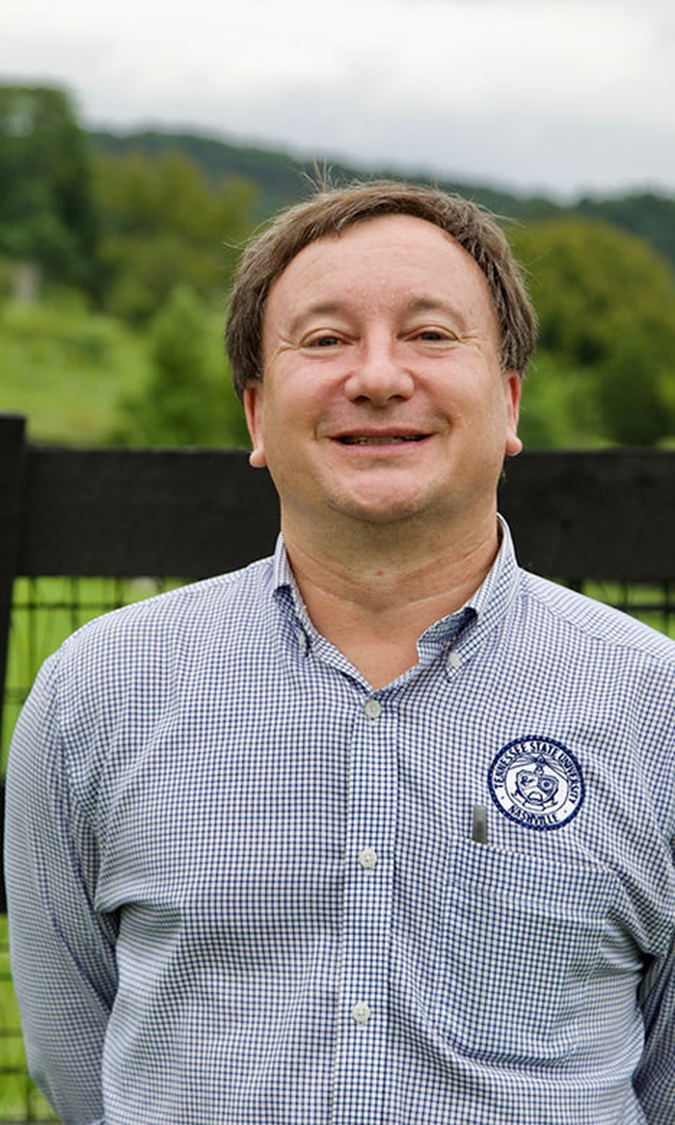
Dr. Matthew W. Blair
Plant Breeder and Full Professor
Tennessee State University
Profile
Dr. Matthew W. Blair, PhD is a Plant Breeder and Full Professor at Tennessee State University (TSU) where he and his team conduct breeding and genetics projects on legumes and dicotyledonous C4 crop plants such as cultivated amaranth. He has been an adjunct professor at Cornell University, Universidad Nacional de Colombia, and Vanderbilt University along with a Senior Breeder in the CGIAR system for International Agriculture Research. The program goals of the Blair lab at TSU are to have a major impact on the productivity of small-holder agriculture in the USA and abroad through plant breeding research. The lab actively participates in domestic and international collaborations with multiple African, Asian, Latin American and US research groups in 1862 and 1890 Land Grants including those at Alabama A&M, Clemson, Cornell, Delaware State, Iowa State, Virginia State, University of Maryland Eastern Shore, University of Missouri, and University of Vermont. The Blair laboratory applies molecular biology research to cultivar and crop development, uses various agronomic and physiological testing techniques for association genetics and plant breeding as well as engages in a participatory manner with foreign aid groups, agriculture sector decision makers and farmer groups to improve crop management in the interests of resource limited farmers. Dr. Blair is co-president of the Amaranth Institute, a winner of the Tony Kleese organic breeding award and has been funded by FFAR, USDA-AFRI, USDA-FAS, USAID and 1890s Foundation for research into grain amaranth and legumes such as mung beans, common beans and cowpeas. He is also concerned about the seed supply for small-farm crops, new crops and cover crops for the Southeastern United States and has organized conferences on grain amaranth and novel crops for the region. Dr. Blair has been the advisor or co-advisor for large number of graduate / undergraduate students, post docs and international trainees (cumulative 12 post Doc, over 40 Ph.D., 50 M.S., 65 B.S., 25 trainees, and 70 fellowship students). He has authored or co-authored over 200 refereed journal publications and 20 book chapters.
2024 EID Award Winner

Dr. Jennifer Clarke
Professor and Director of the Quantitative Life Science Initiative
University of Nebraska-Lincoln
Profile
Jennifer Clarke is a Professor and Director of the Quantitative Life Science Initiative at the University of Nebraska–Lincoln (UNL). In her role, Dr. Clarke collaborates with the Associate Vice Chancellor for the Life Sciences to promote and integrate 'big data' sciences at UNL and across the University of Nebraska system. Dr. Clarke's research interests are broad, focusing on statistical methodology (particularly high dimensional and predictive methods), statistical computation, bioinformatics/computational biology, multi-type data analysis, data mining/machine learning, and bacterial genomics/metagenomics, including a gut function initiative.
Dr. Clarke has been instrumental in the formation and development of the North American Plant Phenotyping Network (NAPPN), contributing to the establishment of its mission, vision, and governance structure. Her leadership extended to the organization of annual conferences and general assemblies, fostering a culture of accessibility, equity, inclusivity, and diversity within the community. Additionally, Dr. Clarke's community-building efforts include serving on the Executive Board of the International Plant Phenotyping Network, organizing events and meetings for the Midwest Big Data Hub and the Digital Agriculture Spoke, and supporting educational and training opportunities within the NAPPN. She has been a key advocate for equity, diversity, and inclusion, leading initiatives that have increased participation from underrepresented and minoritized individuals at NAPPN conferences.
2023 EID Award Winner

Dr. David LeBauer
Staff Scientist
Indigo Ag
Profile
David LeBauer’s work aims to apply scientific understanding to improve the sustainability of agricultural and other managed ecosystems. Early in his career he trained hundreds of farmers to grow shiitake mushrooms, and he has since trained as many researchers in scientific computing. He has also facilitated research by implementing novel approaches to data management and synthesis. This includes developing data and software tools that enable understanding and prediction of plant and ecosystem function.
After receiving his PhD in Earth System Science from the University of California at Irvine in 2008, Dr. LeBauer developed new approaches to combining available data with mechanistic models. Dr. LeBauer started development of the Predictive Ecosystem Analyzer (PEcAn) software to facilitate the integration of available data and expert knowledge with ecosystem models. To support this work, he built a database of bioenergy plant traits and yields (BETYdb) and has contributed to the Global Forest Carbon database and others. Dr. LeBauer first joined the phenomics community when he led the TERRA REF data and computing team that wrangled the world’s largest agricultural robot to produce the world’s largest public domain agricultural dataset. He has contributed to the development and implementation of standardized vocabularies and data formats and to the development of scalable pipelines.
As Director of Data Science for the Arizona Experiment Station over the last five years, Dr. LeBauer built the data science support team for the University of Arizona’s Division of Agriculture, Life and Veterinary Sciences, and Cooperative Extension. This team enables data intensive research across the Division through a combination of training, consultation, and collaboration. Last week, he started a position as staff scientist at Indigo Ag, where he will continue his work with a focus on quantifying and rewarding farmers for adopting sustainable practices. In this position he will apply his expertise in ecophysiology and informatics to support measurement and modeling of managed ecosystems.
2022 EID Award Winners

Claire Gahagan
Research Technician at Agriculture and Agri-Food Canada
[link]

Annarita Marrano
AgBioData Program Coordinator, Phoenix Bioinformatics
I am a plant geneticist and my research aims to identify the genetic and non-genetic factors affecting crop diversity by combining experimental approaches with statistical and computational analyses. [link]

Filipe Matias
Lead in Phenomics & Enviromics at Syngenta LATAM
I am a PhD in "Genetics and Plant Breeding" and my interests are: quantitative genetics, genomic selection, genomic association (GWAS), phenomics, remote sensing, and polyploid species. [link]